You've updated your CV. You've researched the company. You feel ready.
Then the interviewer asks "Tell me about yourself" and your brain goes blank.
It happens to almost everyone. The problem isn't knowledge — it's that most people prepare by reading, not by speaking. And interviews are speaking events.
Why Silent Preparation Fails
Reading through common interview questions in your head feels productive. But when you sit across from a hiring manager, the pressure changes everything. Your thoughts scramble. Your sentences run long. You forget the point you were making halfway through.
The only way to fix this is repetition out loud — the same way athletes train under conditions that simulate the real thing.
What Interviewers Actually Want
Hiring managers aren't just evaluating your answers. They're watching how you communicate under pressure. Are you confident? Clear? Do you actually listen to the question before answering?
STAR method (Situation, Task, Action, Result) works well for behavioral questions — but only if you've practiced delivering it naturally, not reciting it like a script.
The Role of Feedback
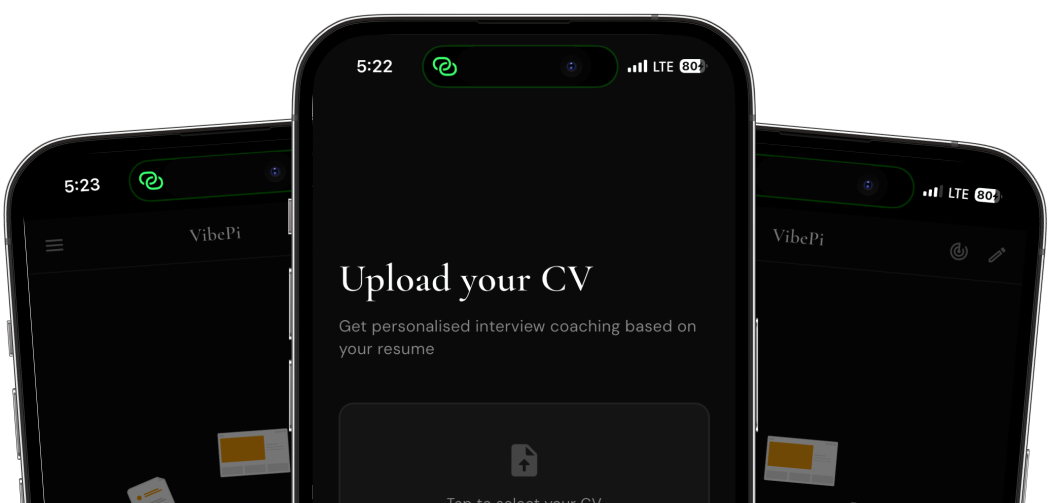
Practicing alone helps, but without feedback you don't know what to fix. A friend might be too polite. A coach is expensive. AI-powered tools like VibePi give you honest, instant feedback after every answer — on your confidence, sentiment, and whether you actually answered the question.
How to Actually Prepare
Start two weeks before the interview. Do one session a day — 20 minutes is enough. Focus on one interview type per session: behavioral one day, technical the next. Review your feedback. Repeat the questions you struggled with.
By the time the real interview comes, speaking about your experience out loud will feel natural.
The Bottom Line
Preparation is not reading. Preparation is doing. The candidates who land offers aren't always the most qualified — they're the ones who showed up ready to communicate clearly and confidently.
That's a skill you can build. Start today.